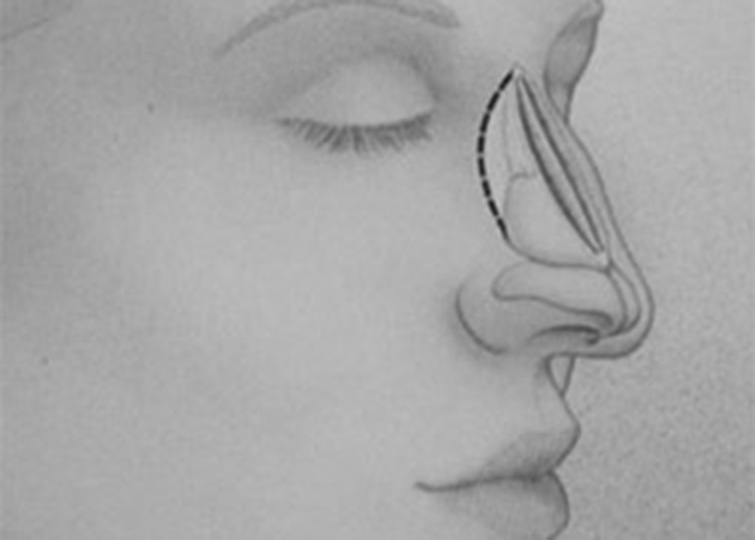
In piezo rhinoplasty the nasal bones are cut and shaped with an ultrasonic device instead of conventional rasps and osteotomes. The device aims to affect soft tissues less while cutting bone and may reduce bruising and allow more controlled bone work in some patients. It is not necessary for everyone; the choice is made at consultation.
How does it work?
Piezo devices cut mineralised tissue — bone — with fine vibrating tips, while vessels, nerves and mucosa are less affected. This is used to rasp, cut and reshape the nasal bones in a controlled way.
Compared with conventional technique
Conventionally the bones are shaped with rasps and osteotomes. With piezo the bone is usually worked under direct view. Some studies report less bruising and swelling, but results vary and surgical experience matters as much as the instrument.
Advantages and limits
- May give more precise control of bone shaping.
- May reduce bruising in some patients, but no “bruise-free” guarantee exists.
- Wider soft-tissue elevation may be needed to see the bone, which can affect swelling.
- It is not used on the tip, which is cartilage.
- Operating time and cost may differ.
Who may benefit?
Patients with wide, crooked or humped nasal bones needing controlled reshaping. If most of the change is in the tip, the added benefit is small.
Recovery
Similar to conventional rhinoplasty: splint and swelling in week one, bruising fading over two weeks and gradual settling over months.
Frequently asked questions
Is piezo rhinoplasty bruise-free?
No; bruising may be less in some patients but cannot be completely prevented.
Does piezo give better results?
It is an instrument choice; planning and surgical experience determine the result.
Is the tip shaped with piezo?
No; the tip is cartilage and is shaped with conventional techniques.
Is recovery faster?
Early bruising may be less in some patients, but the final shape still takes months.
Sources and further reading
General information resources; individual advice requires an examination.
American Society of Plastic Surgeons · Rhinoplasty ↗ASPS · Risks and safety ↗NHS · Rhinoplasty ↗This page is general information and does not replace an individual examination. Surgery has risks and outcomes cannot be guaranteed.