Rhinoplasty
Rhinoplasty means reshaping the nose to improve its appearance.
Reconstructive is applied to correct congenital anomalies and trauma-induced deformities. It can also be performed together with Septoplasty, which is a surgery performed to relieve nasal congestion due to intranasal deformities and deviation surgeries.
Nose aesthetics is the most important element that determines the aesthetics of the facial area. Rhinoplasty, which constitutes the most important surgery group in the field of plastic surgery, is called “rhinoplasty” in medical language. Rhinoplasty is performed to give a new shape to the nose. The tip of the nose can be lifted or lowered, the tip of the nose can be thinned and pointed, or vice versa, thickened, if there are curvatures in the nose, they can be corrected, if the nose is sunken, it can be plumped, if it is humped, the excess can be removed, if the nostrils are large, they can be reduced, and if there is asymmetry, they can be corrected. In addition to problems with the shape of the nose, if there are internal cartilage and bone curvatures called septum deviation and difficulty breathing due to this, nasal deviation surgery is performed along with rhinoplasty surgery to provide relief in breathing. The ideal rhinoplasty should give the nose a natural shape that is compatible with the face and should also ease breathing. This is also very important for health.
Nose Aesthetics Before and After and All Your Questions…
Things to Consider Before Nose Surgery
If nose aesthetics (Rhinoplasty) is being considered, the first step to be taken is to meet with a plastic surgeon. You should discuss your expectations about your appearance and feelings after surgery candidly with your surgeon. One of the most important factors is that you are emotionally stable before undergoing any plastic surgery. Rhinoplasty, or rhinoplasty, will change the shape of your nose; not your life. Plastic surgery will improve your appearance and renew your self-confidence.
After your surgeon examines you, he or she will discuss with you any other changes that will affect practice decisions. In many cases, the earliest age recommended for rhinoplasty is the young age, when the nose has completed ninety percent of its development. The situation of older individuals varies according to age.
During the first consultation, the surgeon will explain specific details to you, including the surgical technique he will use, anesthesia, where the surgery will be performed, and what to realistically expect from the surgery. You should also discuss other factors, such as risks and costs, that should be considered before deciding on rhinoplasty with your surgeon.
Thousands of nose surgeries are performed successfully every year. However, you should be aware of the potential risks of surgery and the specific complications associated with this surgery. When surgery is performed primarily to improve appearance, postoperative complications such as infection are extremely rare. Incomplete recovery may require a second surgery. If you stick to your surgeon’s care recommendations during the healing process and after surgery, your risk of complications will be minimized.
Nose Aesthetics Ankara fees and the material costs of the surgery vary. The fee may vary depending on the length of the surgery, anesthesia, additional materials used and the hospital where the surgery is performed.
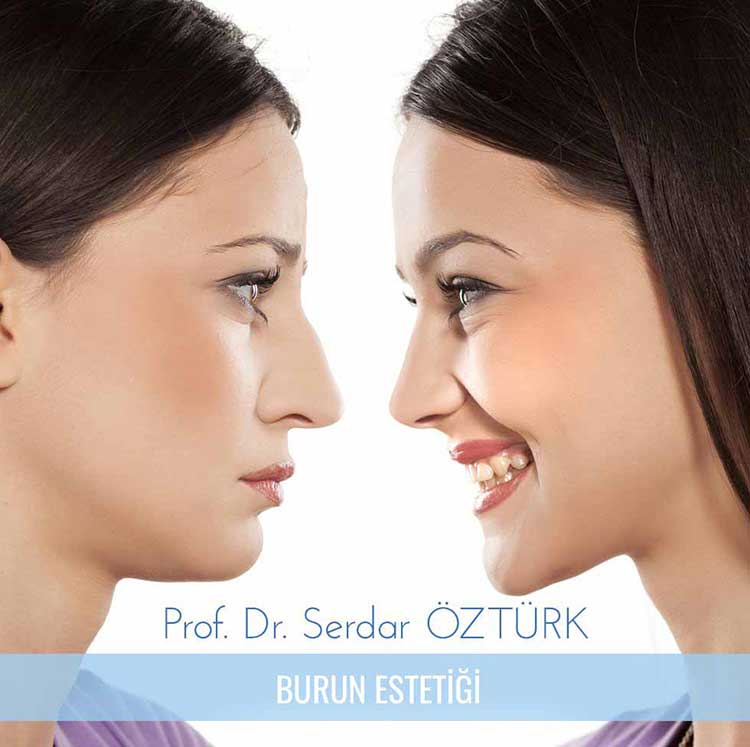
Nose Aesthetic Surgery Intervention
Aesthetic rhinoplasty is applied to reduce the size of the entire nose, reshape the tip of the nose, eliminate bone protrusions in the nose or correct the narrow angle between the nose and the upper lip. In some patients, it may be necessary to add tissue to improve the contours of the nose. Any or all of these changes can be made during a single surgery (Figure 1). The size of the procedure depends on what changes are desired and what your surgeon deems appropriate for you. According to your doctor’s advice, this surgery can only be performed in a hospital.

Figure 1: Side view of a candidate patient for rhinoplasty; large nose, nasal hump, wide nasal tip, stenosis in the upper lip
Nose surgery is a procedure in which the nose area is numbed. It is performed under local anesthesia or using general anesthesia.
In many nose surgeries, an incision is made inside the nostrils towards the area where the surgery will be performed (Figure 2). This incision allows the surgeon to access the cartilage and bone to reshape the nose and change its appearance.

Figure 2: All cartilage and bone structures are accessed through a mucosal incision inside the nostril that is not visible from the outside.

Figure 3: After the bone protrusion on the nose is removed, the bones are cut, the roof is closed and the bones are reshaped.
The bone protrusion on the nose is corrected using a saw and a reaming tool. The nasal bones are then brought together to form a narrower bridge (Figure 3). By removing the cartilage, the size of the nose tip is reduced and a better nose appearance is provided (Figure 4). To correct the angle between the lower part of the nose and the upper lip, the tip of the nose is lifted. This is achieved by shaping the septum (the cartilage that separates both nostrils) through the incisions in the nostrils (Figure 5).
If a large bone protrusion is corrected, unfortunately the base of the nose remains wide. To narrow it, a small wedge-shaped skin is removed from this area and the nostrils are brought closer to the midline (Figure 6). After surgery, the bone and cartilage are fixed in the new shape of the nose with a plaster (splint) made of tape and plastic or plaster (Figure 7).

Figure 4: The cartilages at the tip of the nose are reduced and the tip of the nose becomes thinner and higher.

Figure 5: The angle between the nose and the lip is increased by cutting the anterior part of the septum cartilage.

Figure 6: If the nostrils are wide, they are narrowed by making an incision at their base and removing excess skin.
Especially if septal surgery has been performed, tampons are placed to protect the nasal septum and newly opened airways.
Nose Surgery usually takes 1.5 – 2 hours. It may take longer depending on the size of the surgery.
Recovery After Rhinoplasty Surgery
After surgery, you may have some pain that can be easily controlled with medication. You will be advised to keep your head slightly elevated and apply cold compresses to your eyes to reduce bruising and swelling after the operation.

Figure 7: Splinting is done with a cast or splint to maintain the shape of the new bone and cartilage in the nose.
Although the splint or cast can remain on your nose for up to ten days, it is usually removed within a week after surgery. Your doctor may recommend using a splint at night. Tampons can stay on for several days. Dark circles around the eyes begin to fade within a few days and usually disappear within the next two or three weeks. Mild swelling subsides gradually, but some swelling may remain for months.
Since most aesthetic rhinoplasty procedures are performed through the nose, there is no visible scar. In the procedure performed to narrow the nostrils that expand only towards the tip, there will be scars in the external environment that are barely visible at the fold of each nostril.
It is unrealistic to expect a sudden change for the patient after Nose Surgery. Normal recovery is a gradual process in which the final outcome will not be fully apparent for some time. The final state of the nose may not be visible for weeks, months, or even a year in some patients.
The degree of improvement, the This moment depends on how correctly the job is done, your nose structure and skin. Noses with very clear deformities show dramatically better results (Figure 8). On the other hand, slight protrusions and the size of the tip of the nose are corrected successfully, although the results are barely noticeable. It is natural to have relatives and friends who say that they did not see much difference after some types of rhinoplasty. Don’t consider this as a failure. On the contrary, if it looks better and more natural, the fact that it is not noticed is of course the success of the surgery. As a result, the aim is not to create a new nose that attracts all the attention, but rather to ensure that it complements the general features of the face. Minor adjustments and revisions are sometimes required, requiring additional surgery.
Rhinoplasty You will be able to stand up on the first or second day after surgery. However, your plastic surgeon will recommend the most appropriate program for you to return to your normal routine after surgery. To ensure proper healing, you should limit activities that increase blood pressure, such as walking, running, swimming, and even bending, for the first few weeks. The decision to return to work is your personal decision and depends on the level of swelling.

Figure 8: Appearance of the nose after nasal surgery. Smaller nose, thinner and upturned nose tip, upper lip and nose angle increased.

After rhinoplasty is performed and the plaster is removed, cosmetic products can be used to cover the bruises. However, your doctor will usually advise you to avoid cosmetic products that require a lot of rubbing to apply or that will not come off for weeks.
The purpose of this article is to provide you with information about rhinoplasty surgery. When you consider having plastic surgery, you must be comfortable and have prior knowledge about the surgery, as you will ask your surgeon for additional information you need.
Complications That May Occur After Rhinoplasty Surgery
As in every surgical operation, the success of the operation is directly related to the experience and dexterity of the surgeon performing that operation. Therefore, the better the surgeon, the less likely there will be complications after surgery. However, it is not possible to say that there is no risk at all. As with all surgical procedures, there is always the possibility of a surprise risk. If we talk about the risks that may occur in a nose surgery, we can list them as follows.
- Infection formation
- Nosebleeds
- Risks from anesthesia
- Vinsification on the back of the nose
There is no scar left in rhinoplasty surgeries. However, any intervention (reduction) to the nostrils may sometimes leave a trace, even if very small. However, in nose surgeries, plastic surgeons can perform more successful work in this field. Since plastic surgeons prefer closed surgery for such problems, there is almost no risk of scarring.
What are the risks that may occur after rhinoplasty?
It is possible to encounter any risks after rhinoplasty surgery. Various risks may occur even in operations performed by the most experienced plastic surgeons who specialize in their field. If we were to give a statistical figure in this area, one in every 10 patients may be at risk. There is no need for a person’s psychology to deteriorate when faced with such situations. The person will be satisfied after a second operation. Because success is usually achieved after the 2nd operation.
Sleeve Gastric Surgery